
If you own a commercial property, you have legal responsibilities and duties. One of these responsibilities is to ensure that the water in the property is clean and safe for people to use. Water contains a bacteria called Legionella, a bacteria that can cause serious health complications for anyone exposed to it. As a commercial property owner it is your duty to make sure your water does not contain this bacteria, ensuring that the people in your commercial property are safe.
The legal fall-out
Did you know that if your property is found to have Legionella bacteria in the water, there are serious legal repercussions for you as the property owner? Even if nobody is actually exposed to water that contains the bacteria, even if nobody actually gets ill, you still face penalties. These penalties include fines, enforcements, and even imprisonment. Why? Because actually, this bacterium can be very, very dangerous.
The dangers of Legionella bacteria in the water of your commercial property
It might seem crazy to think that water could be dangerous, but it absolutely can be, in fact, it can be lethal. If someone inhales water droplets that have high levels of Legionella bacteria, they can become ill. Some people might suffer with Pontiac Fever, which is a mild illness that is similar to the flu. Pontiac Fever tends to clear up by itself, although sometimes it will need antibiotics. Other (more unfortunate people), on the other hand, might be diagnosed with Legionnaires’ Disease. This is far more serious. Where Pontiac Fever is like the flu, Legionnaires’ Disease is more like pneumonia, it can lead to other health complications, like lung disease, and in one in ten cases, Legionnaires’ disease is fatal.
In the UK between 300 and 400 people are diagnosed with Legionnaires’ disease every year, approximately 10% of those infected, die from the disease. Unavoidable deaths that come with a high price for the person responsible. If you own the commercial property someone contracts this disease within, then you are the person responsible and that is why the legal fall-out is so serious.
Preventing Legionella bacteria
Legionella bacteria is found in many water sources, including natural water, like streams and lakes. The level of bacteria in natural water tends to be so low, it is harmless. In man-made systems where water is stored and a warm water temperature is maintained, this bacterium can grow to a dangerous level. These man-made systems include:
- Sinks and faucets
- Shower heads
- Air conditioning units
- Humidifiers
- Hot and cold water systems
And this is just naming a few.
The risk of bacteria growing is even higher if the water becomes contaminated with something like rust or sludge, or debris.
Testing and analysing the water
As a commercial property owner, you want to avoid these potential water problems and the best way to do this is by having your water regularly tested and analysed by a professional water management company. This will flag up any issues with the Legionella bacteria forming in the water and this in turn can prompt you to have your water system cleaned and disinfected using the water chlorination method.
There are not set rules as to how often you should have your water tested, so you’ll need to use some common sense when making this decision. The legal requirement is that you have your water system inspected and cleaned at least every two years, we recommend having the water tested annually. You should also test your water if you have made any changes to all or part of your water system, as this can cause bacteria to form.
What is Water Chlorination?
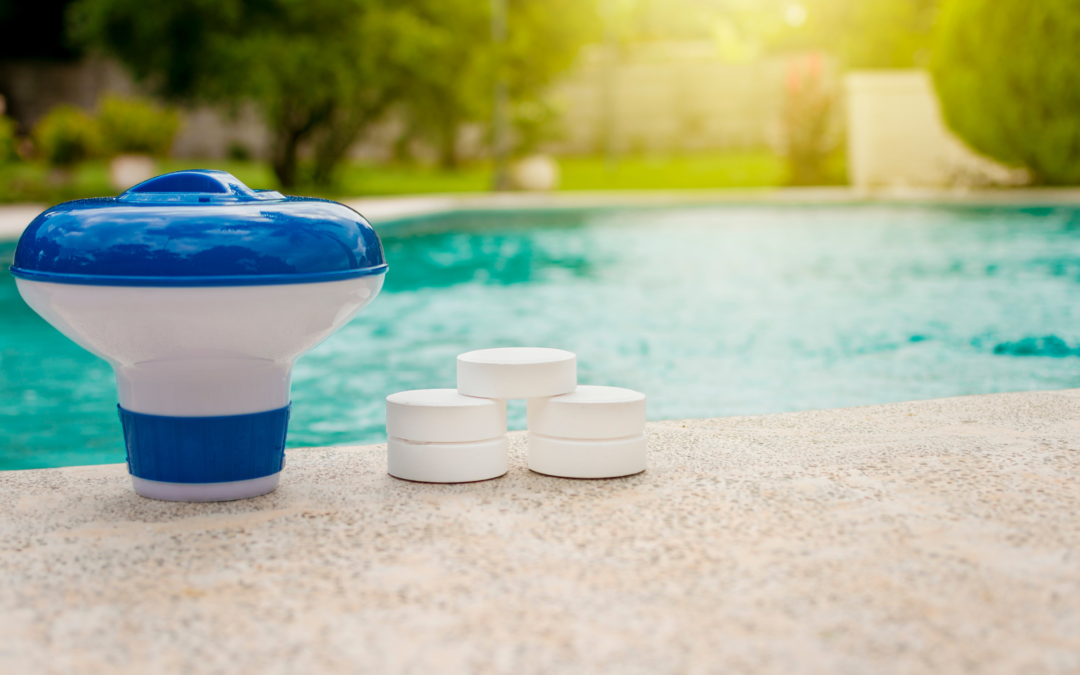
Water chlorination is when chlorine is added to a water supply to disinfect the water. This removes and eliminates all health-threatening organisms from the water and the water system, making the water safe again.
Disinfecting the water in this way is a legal requirement in the UK for all commercial properties that have a water system. Similarly, conducting risk assessments on these commercial properties to identify water systems that could potentially become infected with Legionella bacteria, is also a legal requirement for commercial property owners.
No, you can’t disinfect your own water
Don’t be fooled, water chlorination doesn’t just involve whacking some chlorine into the water and leaving it at that. In fact, the chlorination process is much more complicated. Throughout the entire process, the water system will need to be carefully monitored to make sure optimum water conditions are achieved and maintained. If the level of chlorine is too low, the water won’t be disinfected properly. Equally, if the level of chlorine is too high, the water can become corrosive and could actually damage the water system.
For this reason, it is important to reach out to a water management company, someone who is fully trained in disinfecting water, and has the capabilities to test and analyse the water.